How can we achieve real and sustainable change?

How can we achieve real and sustainable change?

For the past months I have been experiencing what I call an “activist existential crisis”.

It has been difficult to see all the wrong things happening in the world, from the lack of action on climate change, to continued violence against indigenous peoples, and the growing hateful rhetoric against migrants and refugees everywhere in the world.

I love being part of collective actions and learning with and from people. Still, I often feel that some actions do not lead to concrete results -despite the passion and dedication from activists and organizations.

So, I keep asking myself, how can we achieve real and sustainable change? How can we inspire people to take action? How can we use the resources we have efficiently and effectively?

Hours of reading about the topic leave me with one conclusion: we need more people who support our causes. And to get more people to care, we may need to engage with people that may not agree with us.

Embed from Getty Images

I know that many people reading cannot imagine engaging with people that have the complete opposite values to the ones we try to defend.

However, in the real word, these people are part of our society and have the right to vote and/or run for office.

Tell me about any social issue you care about; the truth is that strong laws that protect people- especially vulnerable communities- are vital for achieving real and sustainable change.

And to have these laws we need enough people caring or at least supporting our cause. More people in our side means more people voting representatives that care about these issues.

Embed from Getty Images

And to illustrate this, I want to reference two articles which give great examples of how we can make activism more efficient and effective.

The first article is called When Does Activism Become Powerful? by Hahrie Han.

Hahrie and their team are studying “successful” campaigns and/or movements with the goal of finding out if what do these movements have in common.

According to their study, what all these “winning” campaigns have in common is that they see people – regardless of their ideology /beliefs- as the source of their power.

 “People in these organizations acted not as outraged ideologues but instead as human, connected to one another, seeking a better world”

Hahrie Han

The article gives the example of a a ballot initiative in Cincinnati to implement a new tax which would significantly benefit poor black communities. Cincinnati is one of the most racially dived cities in the U.S

The strategy of AMOS (the organization behind the campaign) was to develop a six-week racial reconciliation program in which participants listened to each other and reflected on their racial biases.

Once trust was built, the movement was unstoppable: the initiative won by 24 percentage points, the largest margin of any new education initiative in the history of Cincinnati.

Embed from Getty Images

The second article “How to talk someone out of bigotry” by Bryan Resnick also makes the argument that to change people’s beliefs we need to be willing to talk to them.

The article talks about a new activism strategy called “Deep canvassing”, that consists primarily in engaging in conversations with people that oppose your cause.

Canvassers listen respectfully to the reasons why people oppose an issue and after the “opponent” tells their story, the canvassers then shares a story of their own (usually about the issue in matter).

The goal is to find common ground between people that think differently and to inspire the feeling of empathy based on a heart -to heart conversations.

Embed from Getty Images

 Yikes, right? But is seems to work.

The articles include the case study of a campaign where LGBTQ activists achieved to win a ballot to keep a law that protects the rights of trans people in Massachusetts.

These group of activists used “Deep canvassing” to start healthy conversations with people that did not support the law:

“If they met a voter who wanted to get rid of the law, they wouldn’t call them out… they did something more radical: They listened, non judgmentally, and began a conversation”

Bryan Resnick

Studies are showing that “calling people out” only makes people more adverse to your cause mostly because they feel “threatened”.

Deep canvassing works because you treat the person across you with respect. And instead of trying to make them change their mind, you are only trying them to feel empathetic towards your cause.

“The new research shows that if you want to change someone’s’ mind you need to have patience with them… Its not about calling people out or labeling them fill-in-the-blank- phobic”

Bryan Resnick

As a way of concluding this post I want to say that while I find these articles and the debate they are opening interesting and enriching. For many people who experience are affected by racist, xenophobic and other discriminatory practices, talking to the people that contribute to their pain is simply not possible.

Having said this, I do believe in the power of words. I am still open to talk to people who are willing to have conversations based on mutual respect.

What do you think ? 😊
We need a male contraceptive pill and we need it now

We need a male contraceptive pill and we need it now

This week I have an appointment to remove my Implanon after 3 years of use and I couldn’t be more excited and frustrated at the same time.

The past three years have been what I describe as a love-hate relationship with my implant. On the good side, it has been great having one of the most (if not the most ) effective methods of birth control- with 99% effectiveness.

However, like everything good in life it has come at a great price- spotting (sometimes for weeks), more headaches and extreme mood-swings; all listed as possible side effects of the implant.

If you use or have used any type of hormonal birth control you know what I am talking about. I mean, you only need to type “side effects of hormonal contraceptives” on a browser and you will find forums and pages dedicated to the topic.

If you do not have ovaries and you are reading this please know that it is really hard for women to find a contraceptive that fits their lifestyles, that they can afford, and that works for their bodies.

Embed from Getty Images

So, why do we keep using hormonal contraceptives even when they cause us adverse effects? Blatantly speaking many of us are terrorized by the idea of “getting” pregnant. Using condoms – which have an 85% effective rate —as our ONLY method of birth is rather brave.

Not only do we feel the side effects of birth control, but very often we have to read/and hear sexist comments on how it is ” women’s fault” “getting pregnant” (like if men did not participate in the process) .

When it comes to birth control we also have to talk about all the women across the world are denied the right to obtain birth control – which constitutes a type of gender-based violence. A recent report showed that only 53 million women have begun using contraceptives since 2012, which is far from the goal of 120 million women experts had hoped to reach by 2020.

And I could write an entire essay on how unjust it is that women have to pay for birth control. Planned Parenthood indicated that in the U.S more than a third of female voters have struggled to afford prescription birth control at some point in their lives.

Embed from Getty Images

For these and many other reasons, I simply cannot wait for the precious moment when male hormonal contraceptives are ready and available to the public- although it seems it wont be around for another 10 years. The world owes women equity when it comes to birth control. And don’t get me wrong, I don’t believe that a male pill will solve all the issues I have mentioned but it will be an opportunity for men to step up and share responsibility for birth control.

For me, it is simple: I expect that me and my partner are equally responsible for the use of birth control. And if male contraceptives become available, I think it’s time for them to carry on the torch – at least for 3 years 🙂 Or what do you think?

A Guide to Talk About Abortion

A Guide to Talk About Abortion

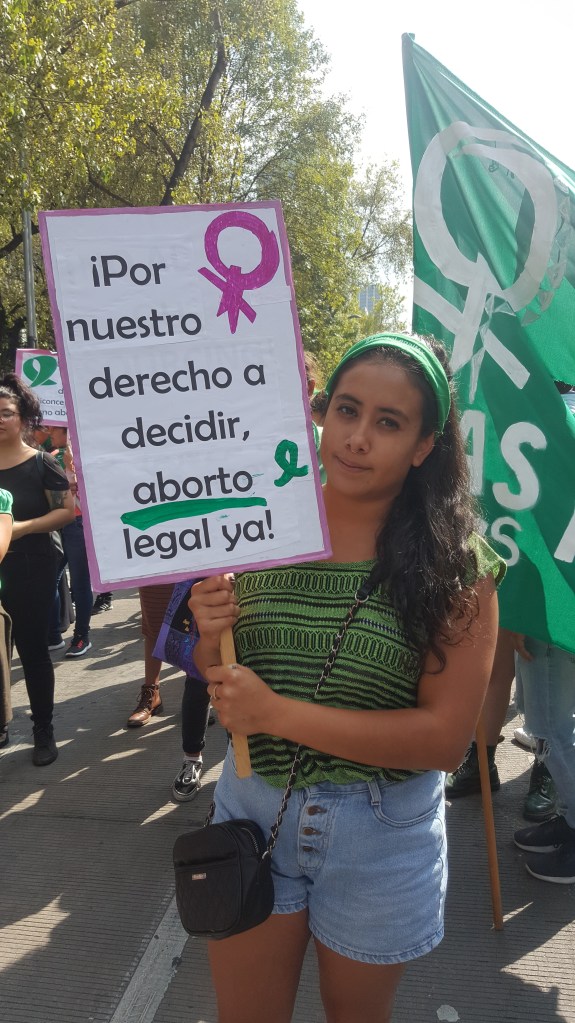
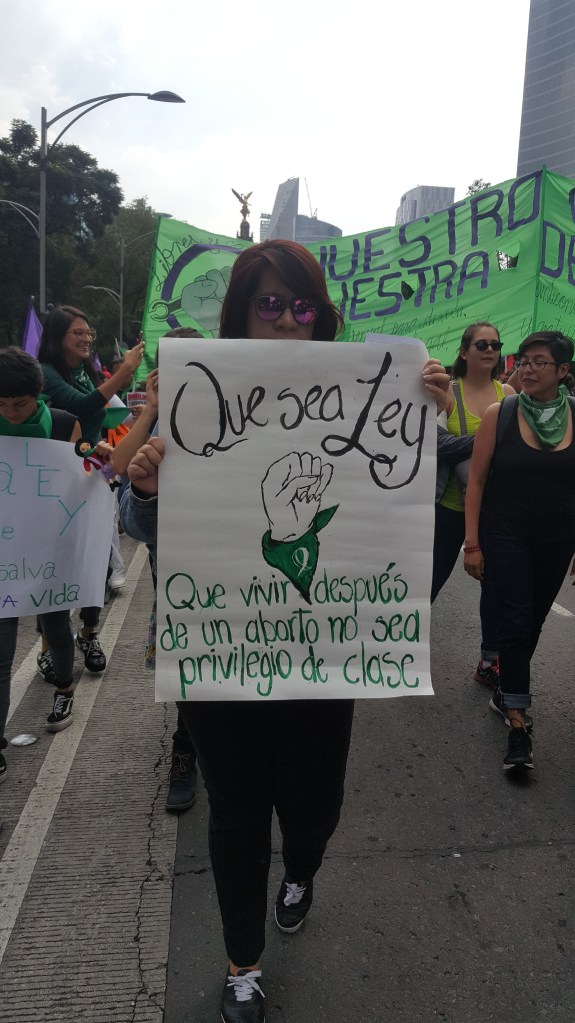
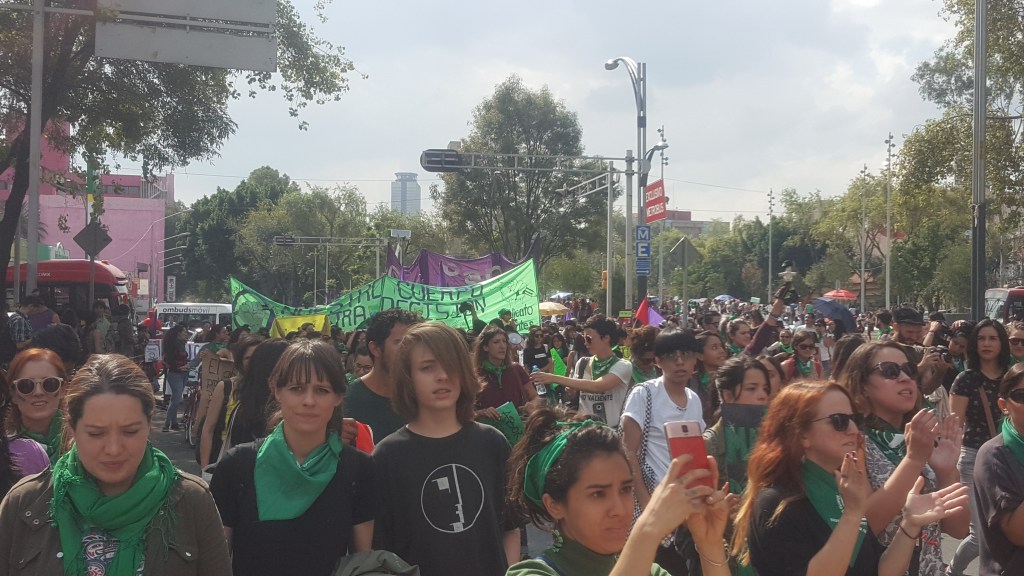
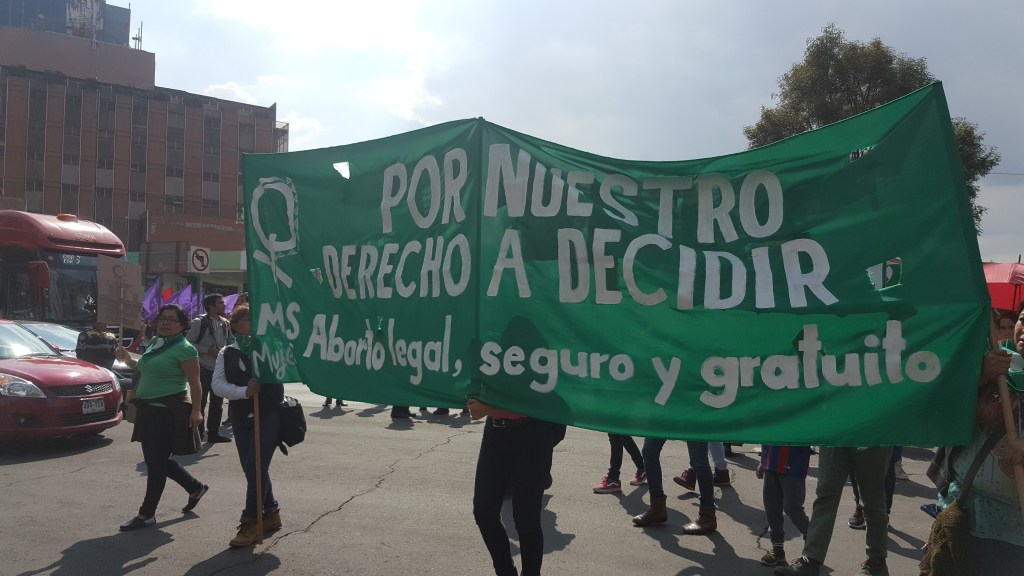
In honour of the Women’s marches taking place across cities in North America and the world, I have decided to write about one of the issues that is- still- highly contested and attacked: safe, legal, and free access to abortions.

In Canada, although abortions are not criminalized no law guarantees women’s access to this health service. Right now, proposed “Bill 207” in Alberta could severely limit access to sexual and reproductive health services including abortions, according to Amnesty International.

In Mexico, only the capital city provides abortion services free of charge. However, abortion is still included in the criminal code of the country. In El Salvador- which practices an outright ban- women can be charged with “homicide” if they are suspected of having an abortion.

March demanding Legal Access to Abortion serivices- Mexico City -Mexico

The ani-abortion rhetoric in El Salvador- and in many other places- is highly linked to religious and moral principles of people, and of course- to the continued violence exercised against women through the control of their bodies and sexualities.

I believe that to change laws, you need to win people’s hearts; especially in countries where the anti-abortion rhetoric is predominant. For this reason, I have developed my own sort of “guide” that I use when engaging in conversations about the topic.

Before I start writing down my list I need to point out some important things : I never have conversations with people on Facebook, or with people I barely know. Second, I only talk to people who are open to have a conversation based on mutual respect. Finally, you are not responsible for having conversations with people, specially if you know that the conversation will hurt you. There are some people who are just not worth my time- and distancing from them is what is good for me and keeps me motivated to continue my work 😊 Here is my list :

1.- I never engage in conversations about whether is right or wrong to have abortions. For me, the conversations is about women’s access to legal, safe, and free abortions. I always bring the conversation back to “we are not discussing if it’s right or wrong, we are discussing whether it should be punished by law or not” . The “right or wrong” conversation is not relevant on health issue that endangers the lives of so many women.

For our right to choose-Legal abortion now

2.-  Something that has helped a lot is asking people if they think that women who have abortions should be in jail. This question really throws people off balance, and it really opens the conversation about the “legal side” of the issue. I usually use phrases like: “What the movement is trying to achieve is that women are not put in jail for having abortions”   I have found that many people who think abortions are wrong don’t go as far as thinking it should be punished with prison.

3. -I always try to explain the many gray areas that criminalizing abortions creates. I explain how women in El Salvador who suffer miscarriages can be accused of homicide and be sent to jail. Or how in countries with restrictive abortion laws, women are denied the right to terminate their pregnancies, even when the pregnancy endangers their lives. Doctors often wait until a woman is at severe risk of dying before they can terminate the pregnancy, and even then, they risk being accused of homicide. Again, I try to put people first with sentences that sound like this “If I am happily pregnant, but I suffer I miscarriage, do you think I should go to jail?

That surviving an abortion is not a class privilege

4.- Use real stories of people who have suffered the negative effects of criminalizing abortions, and explain what the “extremes” – El Salvador- look like.

5.- Talk about the social, economic, and health problems that forcing women to carry pregnancies to full term, creates for the entire society. Explain how WOC, indigenous women, women in rural areas and women living in poverty are more vulnerable to restrictive abortion policies. And how adolescent pregnancy can have many negative social and economic effects on the future of parents.

6.- Finally, I always remind people that: criminalizing abortions does not reduce abortions- period. What reduces abortions, is granting people with free access to contraceptive methods, comprehensive sexual education, and eliminating violence against women at all levels.

I hope this guide helps you engage in respectful and meaningful conversations with people- especially people that you care who lack knowledge about the issue 😊 Stay safe, and always prioritize your well-being and your mental health!

Happy marching day !